
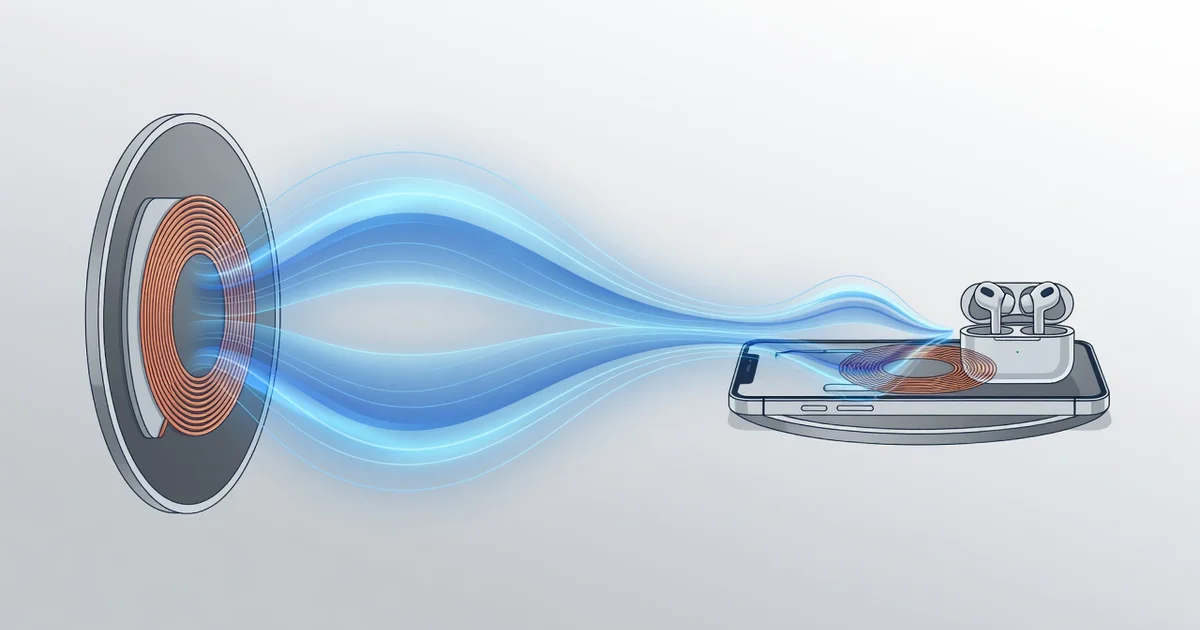
Wireless charging has quietly become one of the most convenient technologies in our daily lives, powering everything from smartphones to earbuds without a single cable. But what actually happens when you drop your phone on a charging pad? Understanding wireless charging systems reveals a clever mix of electromagnetic induction, resonance, and smart power management working together in seconds.
In this guide, we break down the core components, the standards that keep your devices compatible, and the practical factors that affect charging speed. Whether you’re choosing a new charger or just curious about the tech, you’ll get clear, actionable insight into how modern wireless charging really works.
Introduction
Wireless charging has moved from a novelty to a standard feature in smartphones, earbuds, smartwatches, and even electric vehicles. Yet most people interact with it as a simple “drop and charge” action without understanding what makes it work. That gap in knowledge can lead to slow charging, excess heat, and frustration when a device fails to charge at all.
This article explores The Technology Behind Modern Wireless Charging Systems with clear, practical guidance. You will learn how energy moves through the air, why alignment matters, what standards govern compatibility, and how to get the most reliable performance from your devices. Understanding the fundamentals of The Technology Behind Modern Wireless Charging Systems helps you make informed decisions. Reliable information and consistent habits lead to better long-term outcomes.
The technology is not magic. It relies on well-established physics, engineering compromises, and industry standards. Once you see how these pieces fit together, you can choose better equipment, avoid common mistakes, and extend the life of your devices.
Key Concepts
To understand wireless charging, you need a handful of core concepts. These explain why some chargers work better than others and why your phone sometimes gets warm during charging.
Electromagnetic Induction
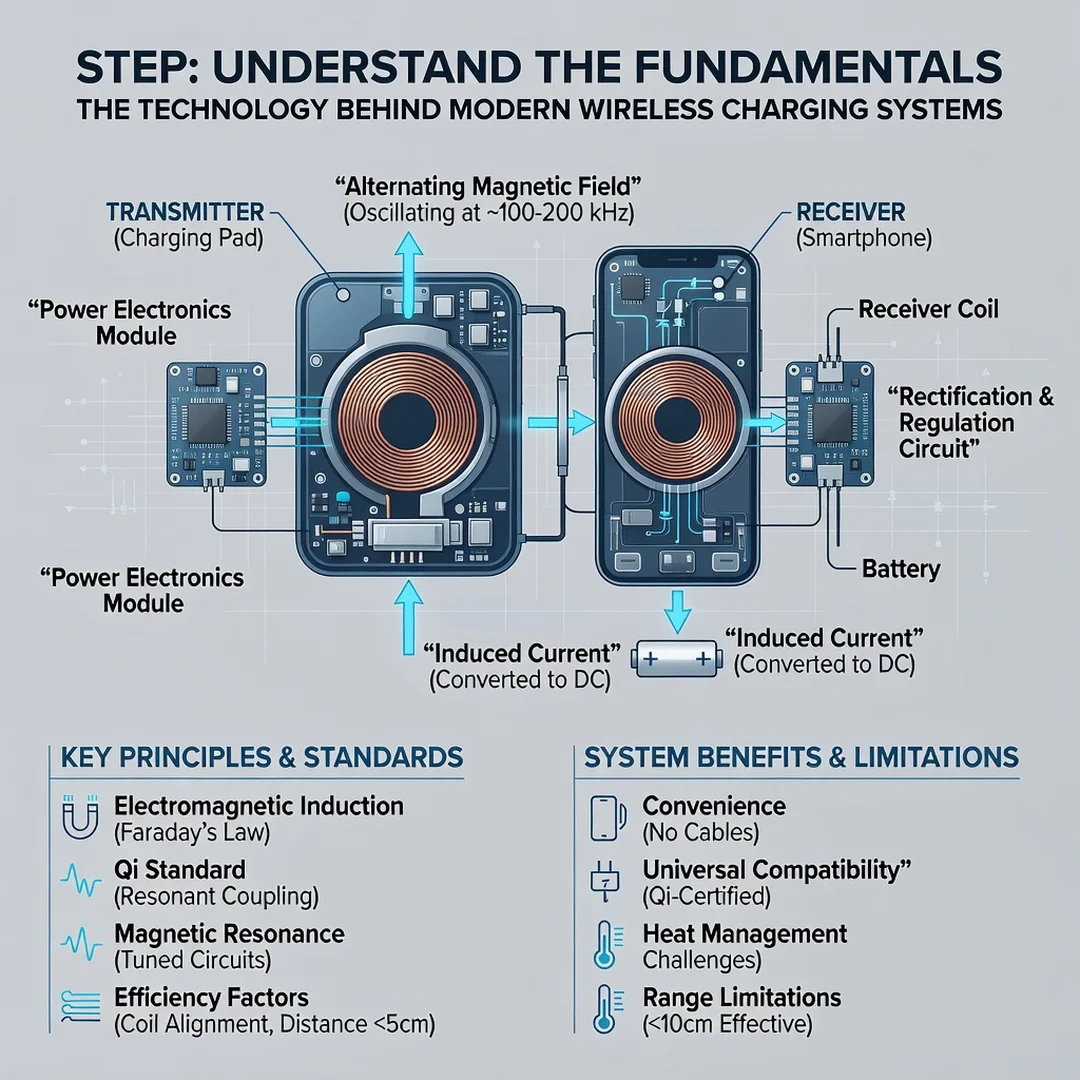
The most common wireless charging method is inductive coupling. A transmitter coil in the charging pad creates an alternating magnetic field. When a receiver coil in your phone comes close, that field induces an electric current. The current flows to the battery through a small circuit.
This is the same principle used in electrical transformers. No physical contact between conductors is needed, but the coils must be close and aligned. Distance and misalignment weaken the field and reduce efficiency.
Magnetic Resonance and Other Methods
Some systems use magnetic resonance, which allows a slightly greater distance between coil and device. Other experimental methods include radio-frequency harvesting and capacitive coupling. For consumer devices, inductive coupling remains dominant because it is efficient, safe, and cheap to manufacture.
Qi and AirFuel Standards
Qi (pronounced “chee”) is the dominant standard maintained by the Wireless Power Consortium. It defines power levels, communication protocols, and safety limits. AirFuel Alliance promotes resonant and RF approaches, but Qi is what you will find in most phones and pads.
Qi supports different power profiles. The basic profile delivers up to 5 watts. Extended profiles allow 7.5, 10, or 15 watts. Newer Qi2 adds a magnetic alignment ring, similar to Apple’s MagSafe, which improves efficiency and reduces heat.
Coil Alignment, Frequency, and Heat
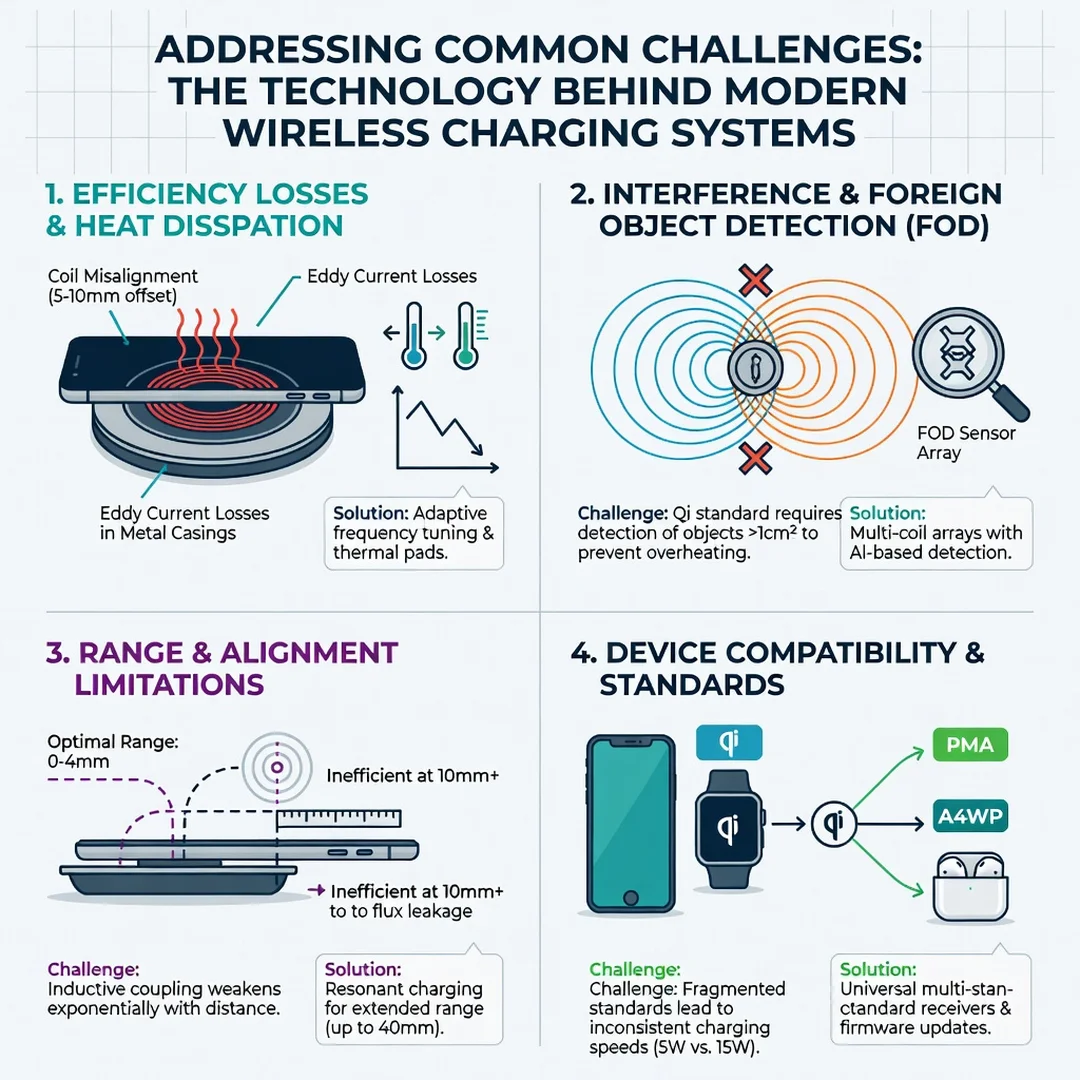
Efficiency depends on coil alignment, operating frequency, and distance. Misalignment can drop efficiency by 30 percent or more. The unused energy becomes heat, which stresses the battery and slows charging.
Most Qi systems operate between 87 and 205 kHz. Higher frequencies can transfer more power but require tighter tolerances. Heat is the main enemy: a hot phone charges slower, and prolonged heat degrades battery capacity.
Communication Between Device and Charger
Wireless charging is a two-way conversation. The receiver sends feedback to the transmitter about power needs and status. If the pad cannot understand the signal, it may stop charging or reduce power. That is why a case or metal object can interrupt charging entirely.
Deep Dive
Now that the basics are clear, let’s look at the engineering details that determine real-world performance.
How a Charging Pad Regulates Power
A charging pad contains a power adapter, a driver circuit, a transmitter coil, and a controller. The controller pulses the coil at a specific frequency. The receiver coil picks up the field, rectifies the alternating current into direct current, and regulates voltage for the battery.
The pad continuously adjusts its output based on feedback. If the phone asks for less power, the pad lowers the frequency or duty cycle. This closed loop prevents overcharging and reduces waste heat.
Foreign Object Detection
Metal objects near the coil can absorb energy and become dangerously hot. Modern systems use foreign object detection (FOD) to measure power loss. If the pad sends 10 watts but the phone reports receiving only 6, the missing 4 watts are likely heating something else. The pad then shuts down or alerts the user.
This is why you should never place coins, keys, or credit cards on a charging pad. Even a small metallic object can trigger FOD and stop charging, or worse, cause a burn.
Thermal Management Strategies
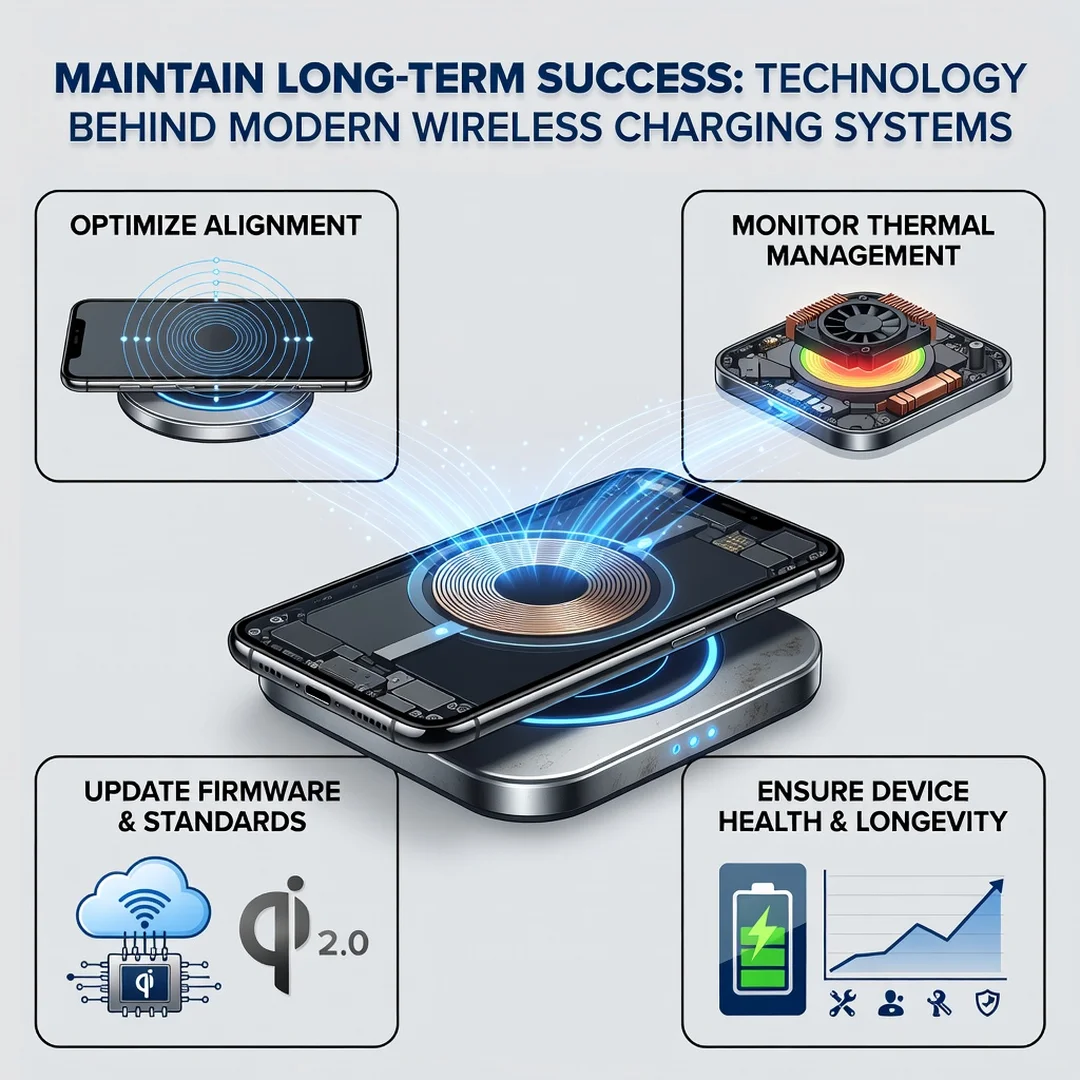
Manufacturers use several tactics to control heat. Some pads include small fans. Others use graphite or copper spreaders. Phones may reduce charging speed when the battery reaches a certain temperature. These are protective measures, not defects.
For best results, charge in a cool environment and remove thick cases. A case thicker than 3 millimeters can reduce efficiency and trap heat. If your phone feels hot, stop charging and let it cool.
Why Charging Speed Varies
Wireless charging is inherently less efficient than wired charging. A wired connection can exceed 90 percent efficiency; wireless often ranges from 60 to 80 percent. That difference shows up as slower charging and more heat.
Speed also depends on the adapter. A 5-watt adapter cannot deliver 15 watts, no matter how capable the pad is. Always match the pad, adapter, and phone to their supported profiles.
Wireless Charging Beyond Phones
The same principles power electric toothbrushes, medical implants, and some electric vehicles. EV wireless charging uses much larger coils and higher power levels, often 11 kilowatts or more. The challenges scale up: alignment, safety, and cost remain significant.
Best Practices
You do not need to be an engineer to get reliable wireless charging. These practical habits cover most situations.
- Align the coils. Center your device on the pad. If the pad has a magnet or guide, use it. Misalignment is the most common cause of slow charging.
- Remove thick or metal cases. Cases with metal plates, magnets, or heavy armor block the field. If charging fails, remove the case and try again.
- Use the right adapter. Check the pad’s required input. A 20-watt USB-C PD adapter is a safe choice for most modern pads.
- Avoid extreme temperatures. Do not charge in direct sunlight or on a hot dashboard. Heat degrades batteries faster than almost anything else.
- Do not leave devices on the pad indefinitely. Once charging completes, remove the device if practical. Trickle charging generates unnecessary heat.
- Keep the pad clean. Dust and debris can interfere with alignment and cooling. Wipe the surface regularly.
- Check compatibility. Look for the Qi logo or Qi2 certification. Off-brand pads may claim compatibility but fail to negotiate higher power levels.
- Update firmware. Some phones and pads receive updates that improve charging stability and thermal behavior.
These habits are simple, but consistency matters. Reliable information and consistent habits lead to better long-term outcomes.
Step-by-Step Guide to Optimizing Your Wireless Charging Setup
Follow these steps to diagnose and improve your wireless charging experience.
Step 1: Understand the fundamentals
Before changing anything, confirm you know the basics. Wireless charging uses magnetic induction between two coils. Efficiency drops with distance, misalignment, and obstructions. Heat is the main byproduct of inefficiency. With this mental model, you can predict why a particular setup underperforms.
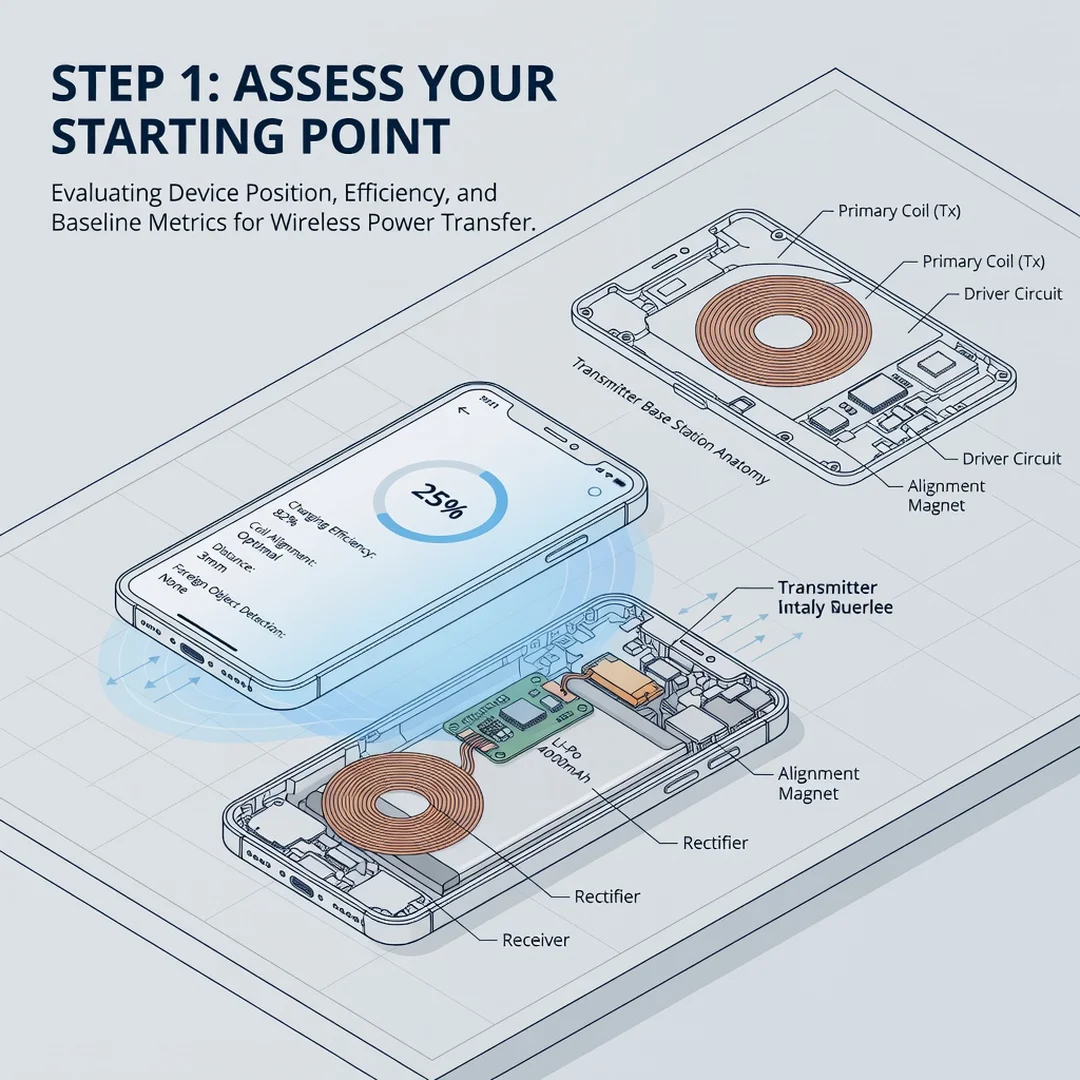
Step 2: Assess your starting point
Test your current setup. Note the charging speed from 0 to 50 percent. Check if the phone gets warm. Try different positions on the pad. Record whether charging stops when you move the phone slightly. This baseline tells you where the problems are.
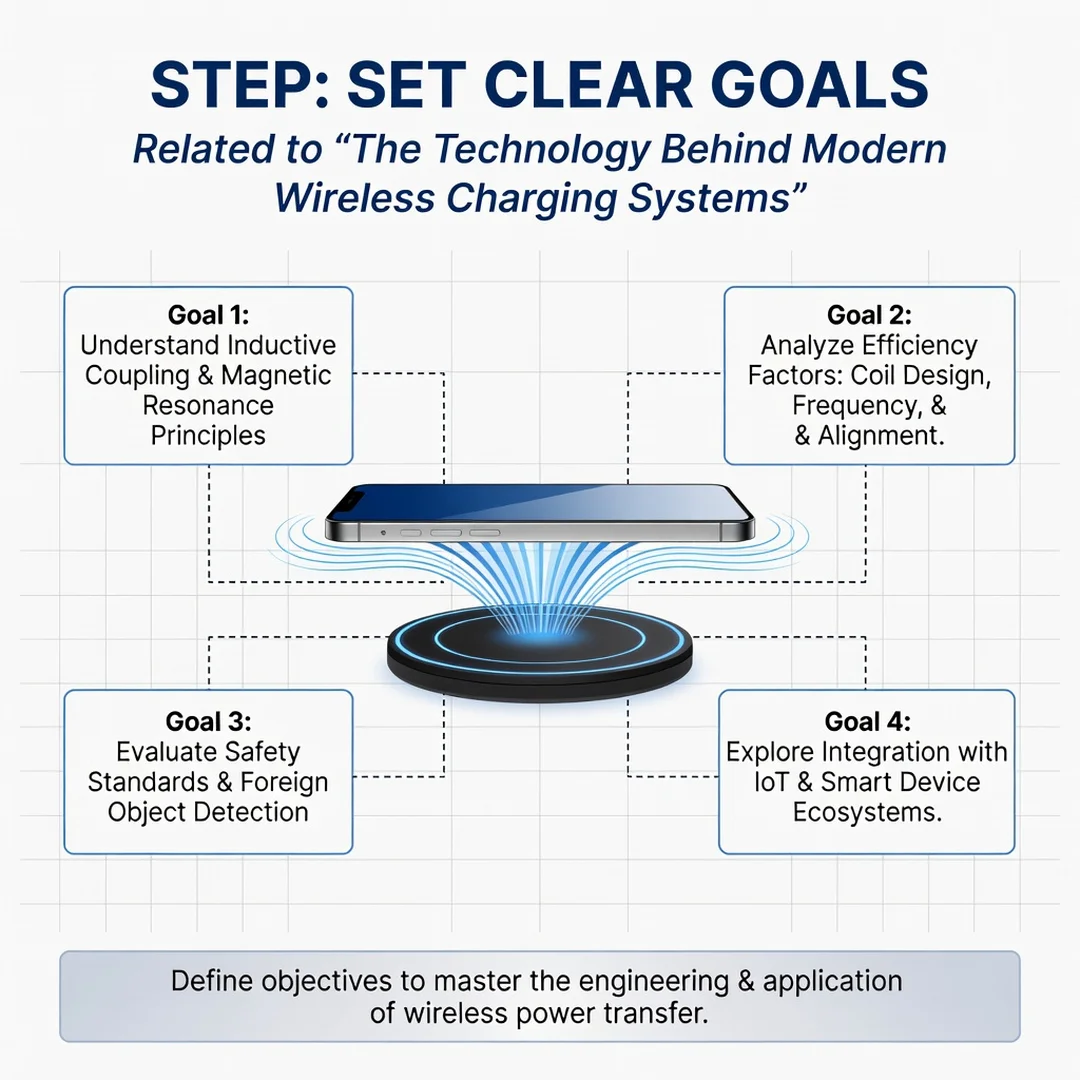
Step 3: Set clear goals
Decide what you want. Do you need overnight charging only, or fast top-ups during the day? If overnight, heat and speed matter less. If fast charging, you need a high-wattage pad, a matching adapter, and a thin case. Clear goals prevent overspending on equipment you do not need.

Step 4: Gather necessary resources
Collect what you need: a Qi-certified pad, a compatible power adapter, and a cable rated for the required wattage. If your phone supports magnetic alignment, consider a magnetic pad or ring. A small thermometer or a phone diagnostic app can help you track temperature.
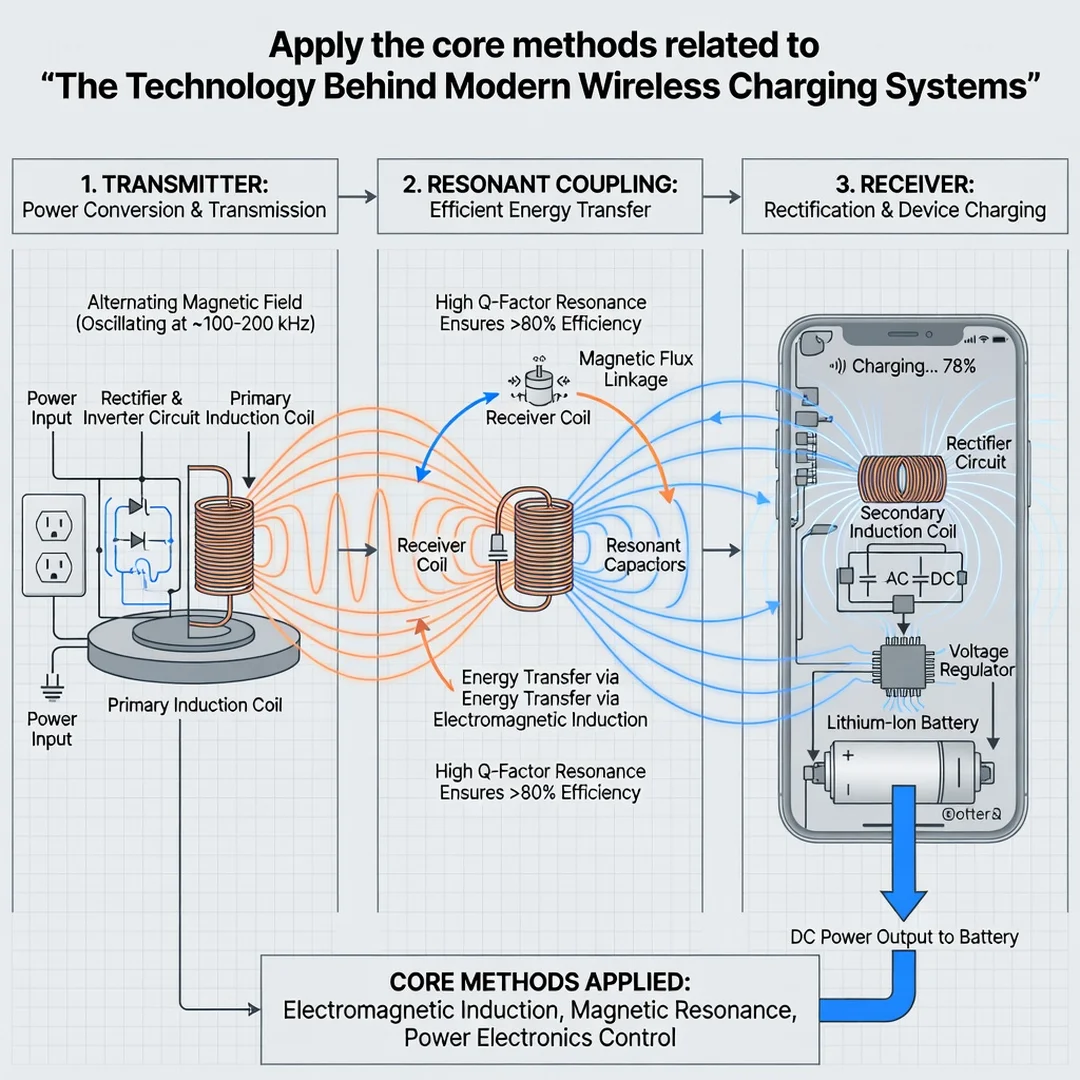
Step 5: Apply the core methods
Set up the pad on a hard, flat, cool surface. Plug in the correct adapter. Place the phone centered on the pad. Remove any obstructions. If charging is slow, try a different position or remove the case. If the phone heats up, lower the charging speed or improve airflow.
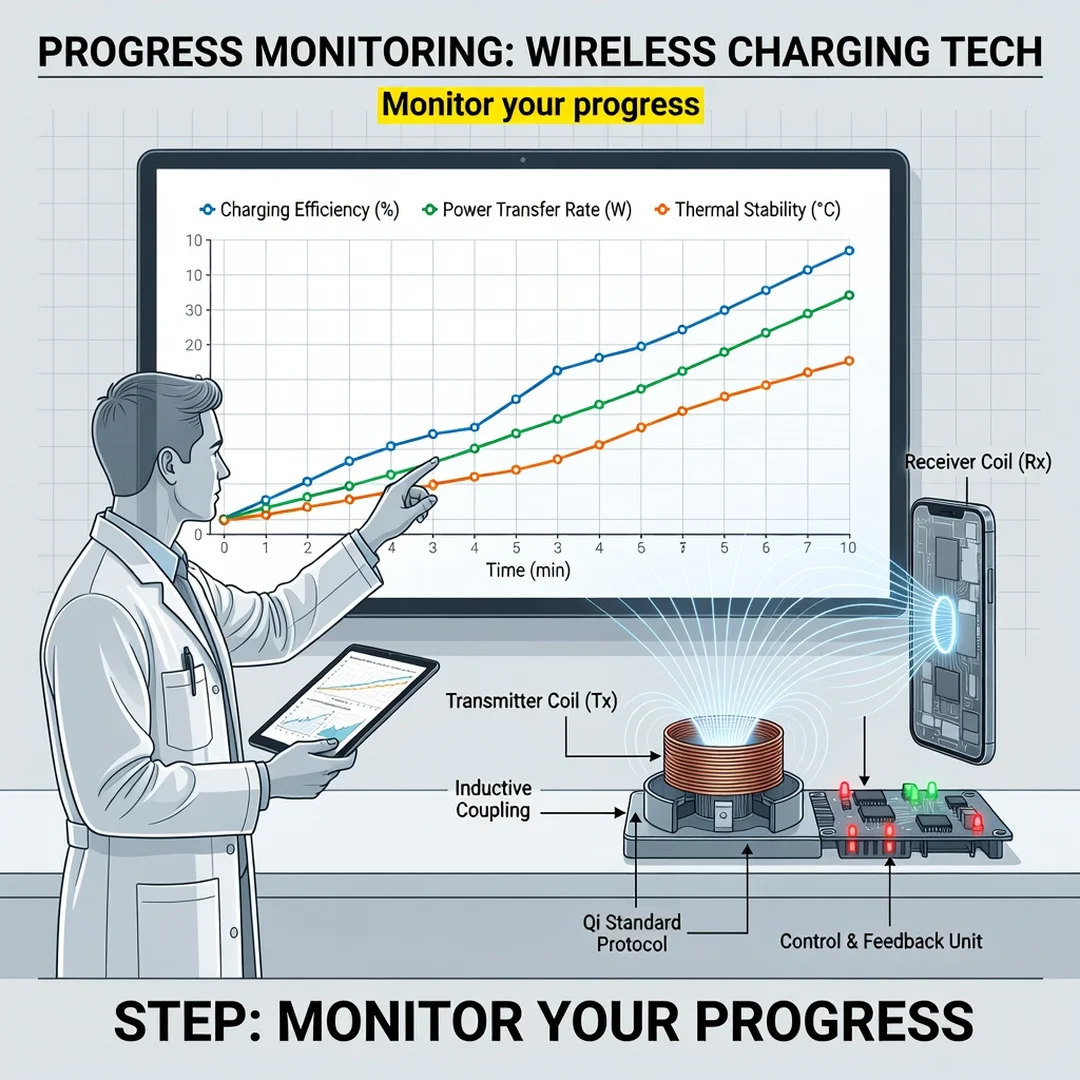
Step 6: Monitor your progress
Check charging speed and temperature over several days. A phone that charges from 20 to 80 percent in about an hour is performing well for 15-watt wireless charging. If it takes much longer or becomes hot, revisit your alignment, case, or adapter. Adjust one variable at a time.
FAQ
What should I know about The Technology Behind Modern Wireless Charging Systems?
You should know that wireless charging relies on magnetic induction, not radio waves or magic. Efficiency depends on alignment, distance, and the absence of metal obstructions. Heat is the main enemy of both speed and battery health. Qi and Qi2 are the standards to look for. A certified pad, a proper adapter, and a thin case solve most problems. Understanding these fundamentals helps you make informed decisions and avoid unreliable accessories.
Who is this guide for?
This guide is for anyone who uses or plans to use wireless charging. That includes smartphone owners, people with wireless earbuds or smartwatches, and anyone curious about how the technology works. It is written for general readers, not engineers. No prior technical knowledge is required. If you want clear, actionable information without jargon, this guide is for you.
Conclusion
The technology behind modern wireless charging systems is elegant and practical. Magnetic induction moves power through the air, while standards like Qi ensure that devices and pads can communicate safely. Efficiency losses are real, but they are manageable with proper alignment, compatible hardware, and attention to heat.
You do not need to overhaul your habits overnight. Start by centering your phone, removing thick cases, and using the right adapter. Those three changes alone will improve most setups. From there, monitor temperature and charging.
You now have a solid foundation for The Technology Behind Modern Wireless Charging Systems. Apply the best practices above and revisit this guide as your needs evolve.