
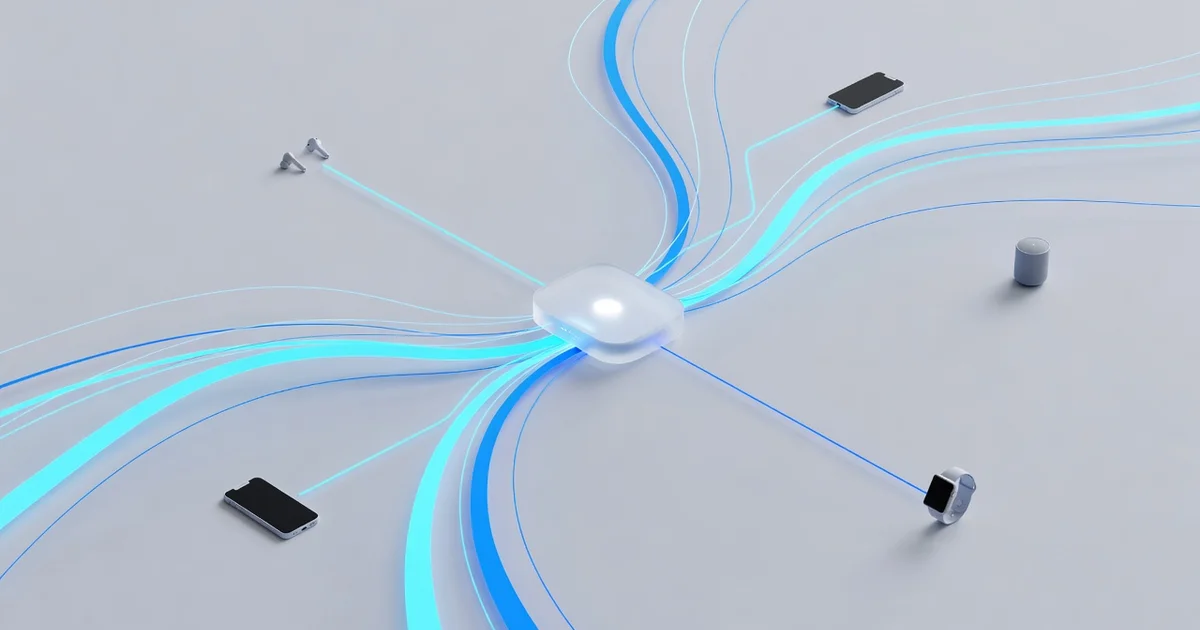
Wireless devices are everywhere, but sluggish pairing, unstable links, and weak range can still frustrate even the best setups. Bluetooth 5.4 technology improves wireless connectivity by refining how devices discover, pair, and stay connected—delivering smoother performance for earbuds, smart homes, wearables, and industrial IoT alike.
In this article, we break down what Bluetooth 5.4 actually changes, why it matters for everyday use, and how to take advantage of its improvements. Whether you are upgrading your gear or building connected products, you will get clear, actionable insights you can apply right away.
Introduction
Wireless connectivity has become the invisible backbone of modern life, linking earbuds to phones, fitness trackers to apps, and smart home devices to each other. Among the many wireless standards available, Bluetooth remains the most ubiquitous. With the arrival of Bluetooth 5.4, the technology takes another meaningful step forward, refining the way devices communicate and manage connections. This article explores How Bluetooth 5.4 Technology Improves Wireless Connectivity with clear, practical guidance. If you have ever experienced audio dropouts, slow pairing, or inconsistent smart device responses, understanding Bluetooth 5.4 will help you see what has changed and why it matters.
Bluetooth 5.4 is not a dramatic reinvention. Instead, it is a targeted update that adds features designed to make wireless connections more reliable, more power-efficient, and better suited for the growing number of connected devices in homes and workplaces. For anyone who relies on wireless peripherals, this update offers tangible benefits—whether you are a casual user or someone managing a complex setup of IoT devices.
Understanding the fundamentals of How Bluetooth 5.4 Technology Improves Wireless Connectivity helps you make informed decisions. Whether you are buying new hardware, troubleshooting a persistent issue, or simply curious about the technology behind your daily devices, the information here is meant to be accessible and actionable. Reliable information and consistent habits lead to better long-term outcomes, and that principle applies directly to how you choose, configure, and maintain your wireless gear.
Key Concepts
Before diving into the specifics of Bluetooth 5.4, it helps to establish a few core concepts that shape how any Bluetooth version works in practice.
Core Specification Versions
Bluetooth versions are defined by the Bluetooth Special Interest Group (SIG). Each version—from 4.0 through 5.4—builds on previous ones. Version numbers do not necessarily mean faster raw data speeds; sometimes they introduce new features, improved power management, or better coexistence with other wireless technologies. Bluetooth 5.4 follows 5.3 and focuses on enhancements rather than a complete overhaul.
Connection-Oriented Communication
Bluetooth operates on a connection-oriented model. Devices establish a link, exchange data, and then either maintain or terminate that link. Improvements in connection management directly affect how quickly devices pair, how stable the link remains, and how much power is consumed. Bluetooth 5.4 refines these processes with features like Periodic Advertising with Responses (PAwR) and Encrypted Advertising Data.
Power Efficiency and Latency
Power efficiency is critical for battery-operated devices such as sensors, earbuds, and wearables. Latency—the delay between sending and receiving data—matters for audio synchronization and real-time control. Bluetooth 5.4 introduces mechanisms that allow devices to stay connected with less overhead, which translates to longer battery life and more responsive interactions.
The Role of the Host and Controller
Bluetooth architecture splits responsibilities between a host (the software stack on your phone or computer) and a controller (the hardware chip that manages radio communication). Bluetooth 5.4 features often require support from both sides. Knowing this helps you understand why a new phone might not immediately unlock every benefit with an older accessory.
Deep Dive
Bluetooth 5.4 introduces several technical enhancements that, together, improve wireless connectivity in noticeable ways. Let’s examine the most impactful ones.
Periodic Advertising with Responses (PAwR)
PAwR is one of the headline features of Bluetooth 5.4. It allows a single device—such as a hub or access point—to communicate with thousands of low-power devices in a highly efficient manner. Traditional Bluetooth advertising is one-way; a device broadcasts data, and others listen. PAwR adds a response mechanism, enabling two-way communication without establishing a full, power-hungry connection. This is particularly useful for large-scale sensor networks, electronic shelf labels, and industrial monitoring. For everyday users, it means future smart home devices can be more responsive while using less battery.
Encrypted Advertising Data
Security is an ongoing concern for wireless protocols. Bluetooth 5.4 adds support for encrypting advertising data. Previously, advertising packets were often sent in the clear, meaning anyone with a receiver could potentially read them. With encrypted advertising data, sensitive information—such as device identifiers or sensor readings—can be protected. This improvement makes Bluetooth more suitable for applications where privacy is essential, from medical devices to location-based services.
LE Power Control and Power Management
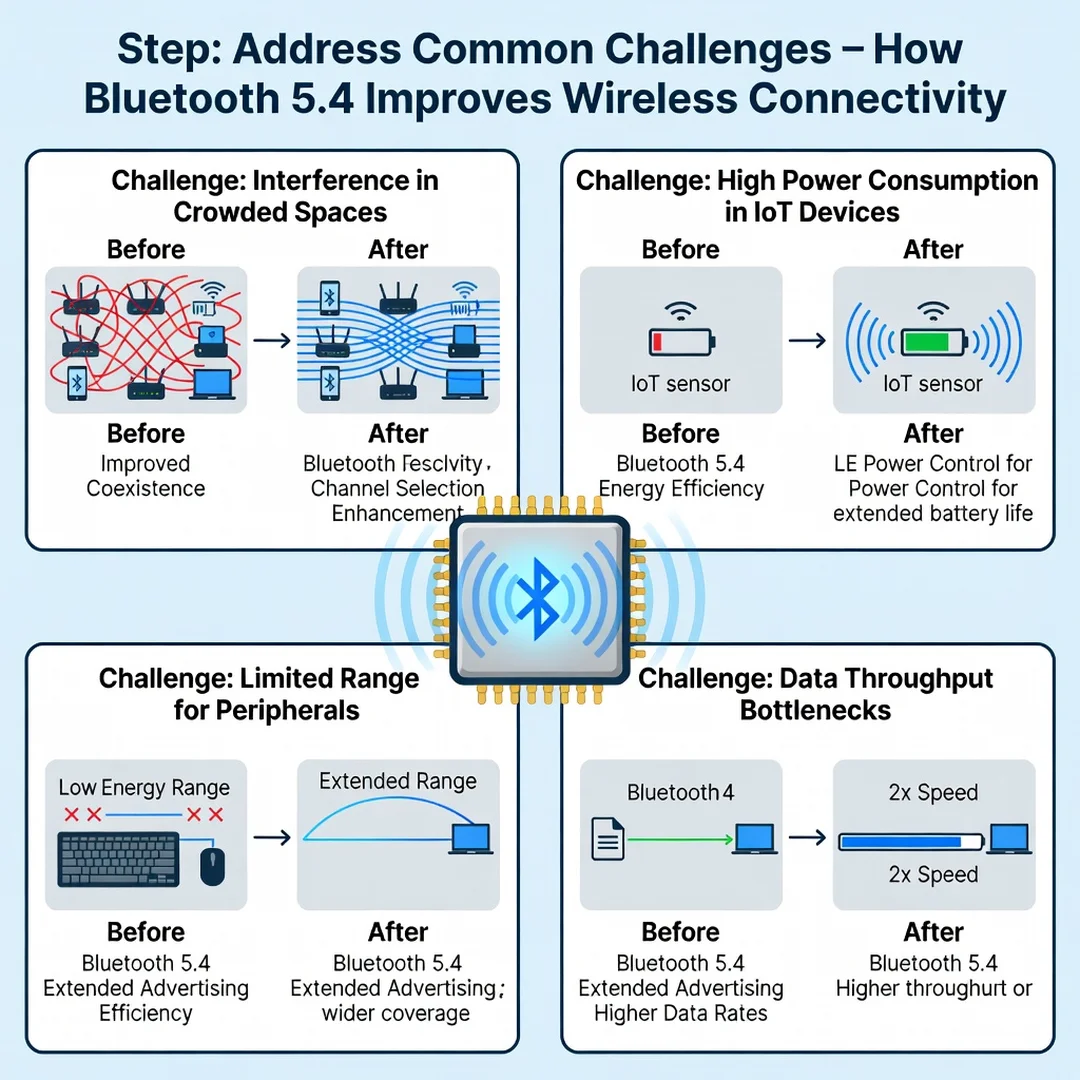
Bluetooth Low Energy (LE) already emphasized power efficiency, but version 5.4 refines power control further. Devices can dynamically adjust their transmit power based on the quality of the connection. If you are close to a device, it can lower its power output, saving battery. If you move farther away, it can increase power to maintain a stable link. This dynamic adjustment reduces interference and extends battery life without requiring manual intervention.
Improved Coexistence and Reliability
In crowded wireless environments—apartments with many Wi-Fi networks, offices with dozens of Bluetooth devices—interference is a real problem. Bluetooth 5.4 includes enhancements that help devices better coexist with other radios. By managing connection parameters more intelligently, it reduces the likelihood of dropouts and stuttering. For audio devices, this can mean fewer skips; for IoT sensors, it means more consistent data reporting.
What Bluetooth 5.4 Does Not Change
It is equally important to understand the limits. Bluetooth 5.4 does not significantly increase raw throughput compared to 5.0 or 5.2. It does not double range. Instead, it makes existing connections smarter and more secure. If you were hoping for a dramatic leap in audio quality or file transfer speed, that is not what this version delivers. Its benefits are more subtle but still valuable: better battery life, stronger security, and improved reliability in dense environments.
Best Practices
To get the most out of Bluetooth 5.4, you need more than compatible hardware. How you set up and maintain your devices matters just as much. Here are practical best practices.
- Check compatibility before buying: Both the host device (phone, laptop, tablet) and the accessory must support Bluetooth 5.4 to unlock its features. Check specifications carefully, and remember that a 5.4 accessory paired with a 5.2 phone will fall back to 5.2 behavior.
- Update firmware regularly: Manufacturers often release firmware updates that enable new Bluetooth features or fix bugs. Enable automatic updates where possible, or check for updates manually every few months.
- Keep devices within reasonable range: Even with improved power control, physical obstacles like walls and metal can weaken signals. Place hubs and routers centrally, and avoid enclosing devices in metal cabinets.
- Minimize interference: Wi-Fi routers, microwaves, and USB 3.0 devices can interfere with Bluetooth. If you experience dropouts, try moving your Bluetooth receiver away from these sources or changing Wi-Fi channels.
- Manage paired devices: Over time, your phone or computer may accumulate dozens of paired devices. Remove old or unused pairings to reduce connection overhead and improve reliability.
- Use security features when available: If your devices support encrypted advertising data, enable it. This is especially important for wearables that broadcast personal information.
- Test before relying on it: For critical applications—like a wireless keyboard for work or a medical monitor—test the connection in your actual environment before depending on it.
Step-by-Step Guide to Improving Your Wireless Setup
If you want to take advantage of Bluetooth 5.4 or simply improve your current wireless experience, follow these steps.
Step 1: Understand the fundamentals
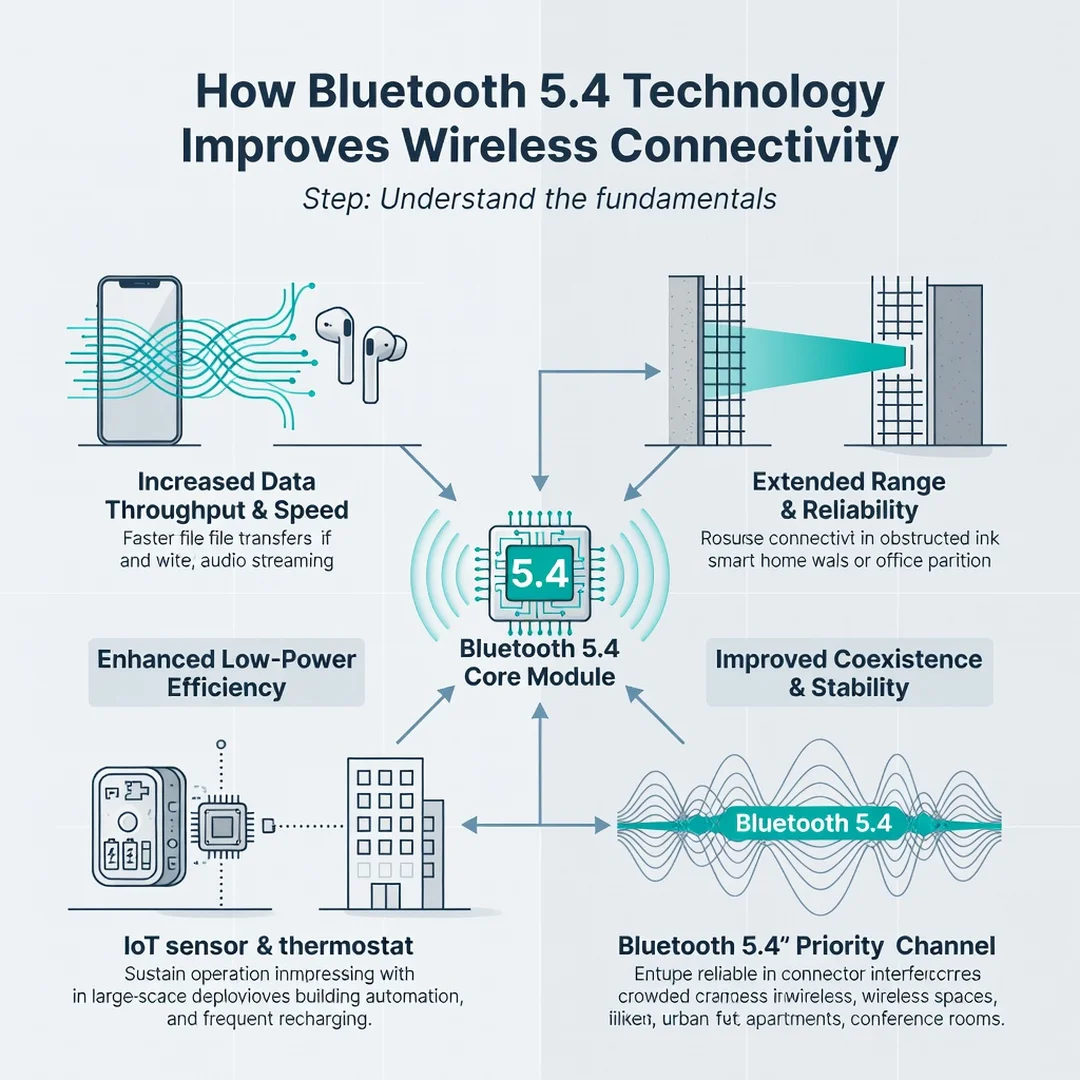
Start by learning what Bluetooth 5.4 actually offers. Read through the key concepts and deep dive sections above. Know the difference between features like PAwR, encrypted advertising, and power control. Understand that benefits depend on both your host device and your accessories. This knowledge will guide every decision that follows.
Step 2: Assess your starting point
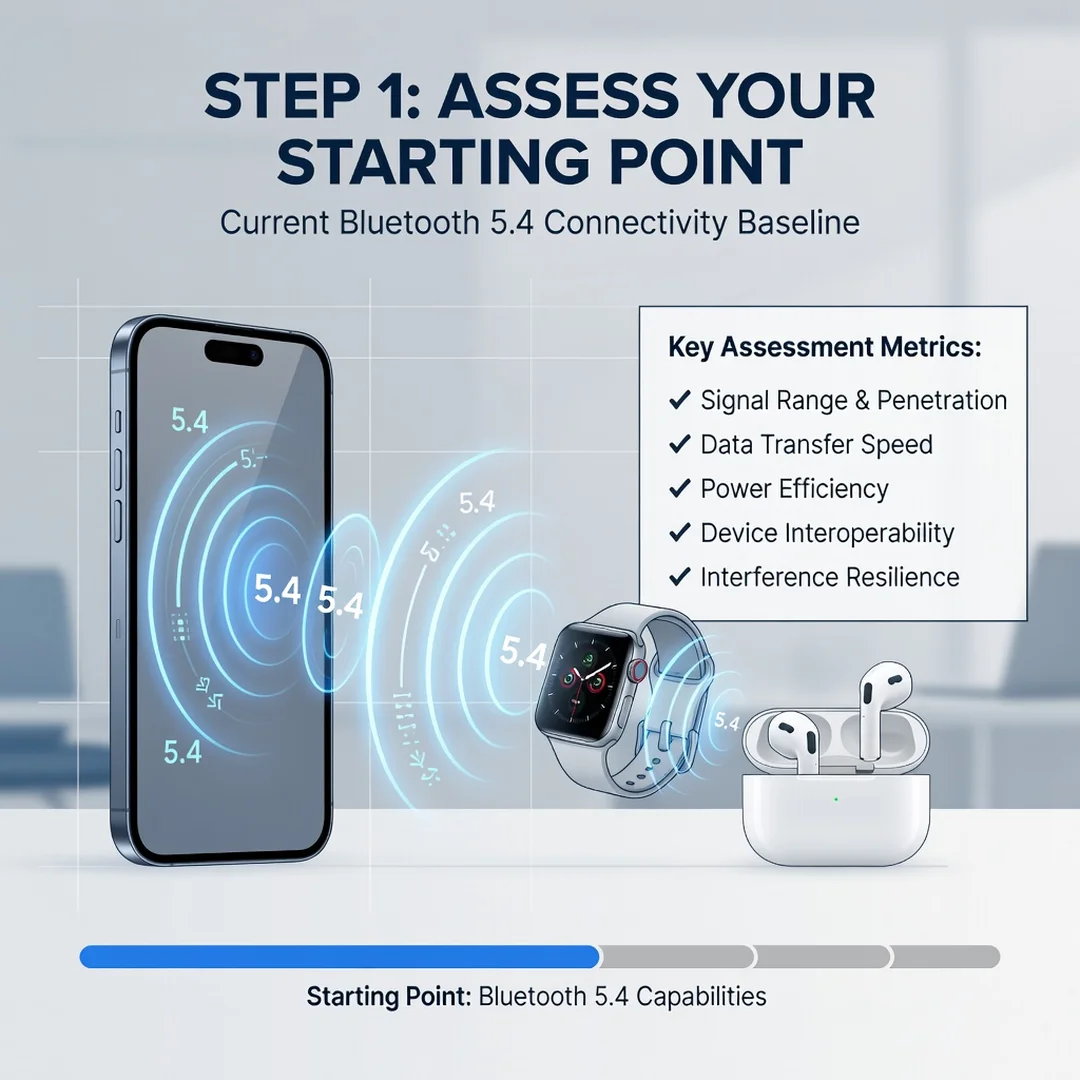
Inventory your current devices. List every Bluetooth accessory you use regularly—headphones, mouse, keyboard, smartwatch, speakers, smart home sensors. For each, find the Bluetooth version it supports. You can usually find this in the device settings, the product manual, or the manufacturer’s website. Also note any recurring problems: dropouts, short battery life, slow pairing. This baseline will help you measure improvement later.
Step 3: Set clear goals
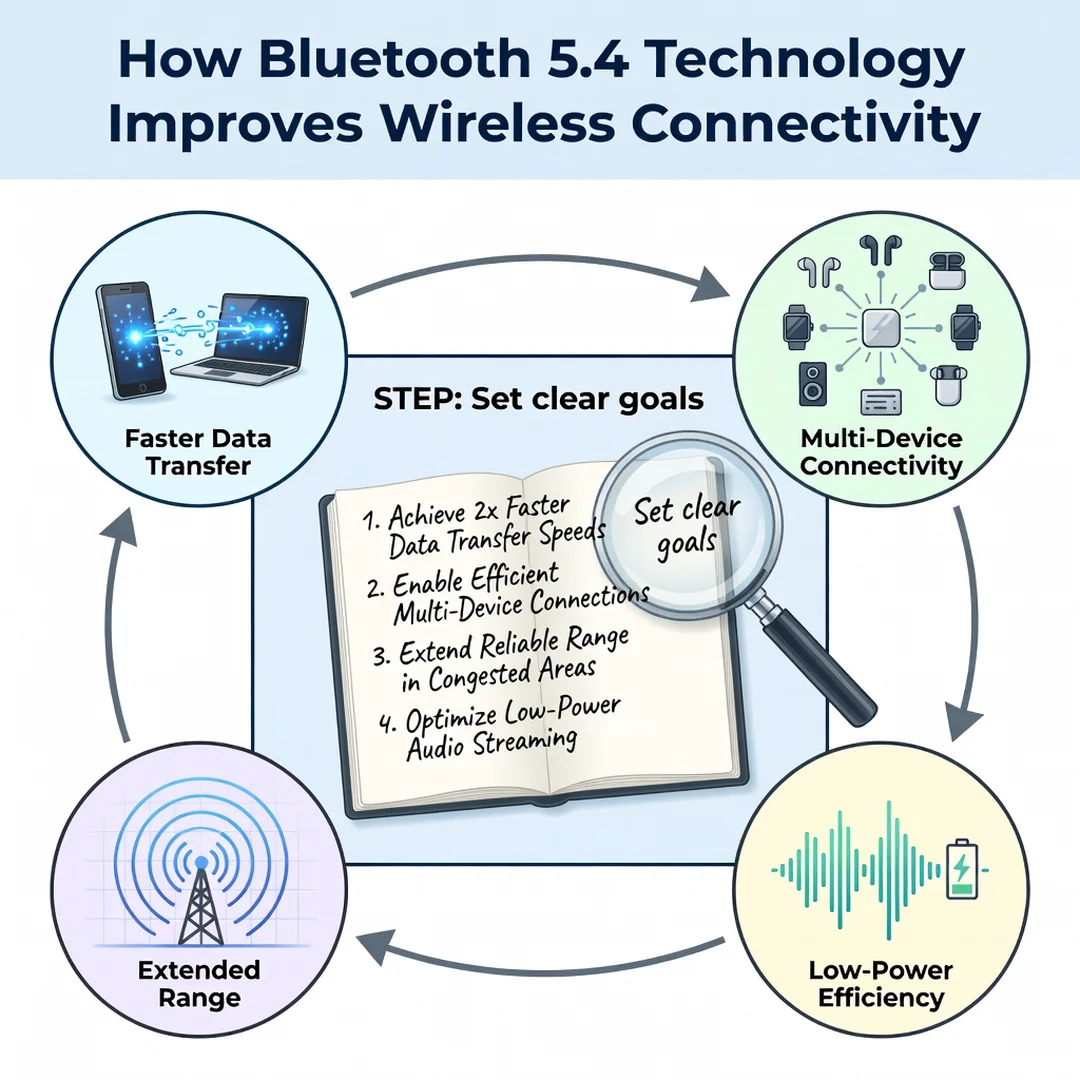
What do you want to achieve? Perhaps you want longer battery life for your earbuds, more reliable connections for a smart home setup, or better security for a wearable. Write down one or two specific goals. For example: “Reduce audio dropouts during workouts” or “Extend sensor battery life from six months to one year.” Clear goals keep your efforts focused and make it easier to evaluate whether changes helped.
Step 4: Gather necessary resources
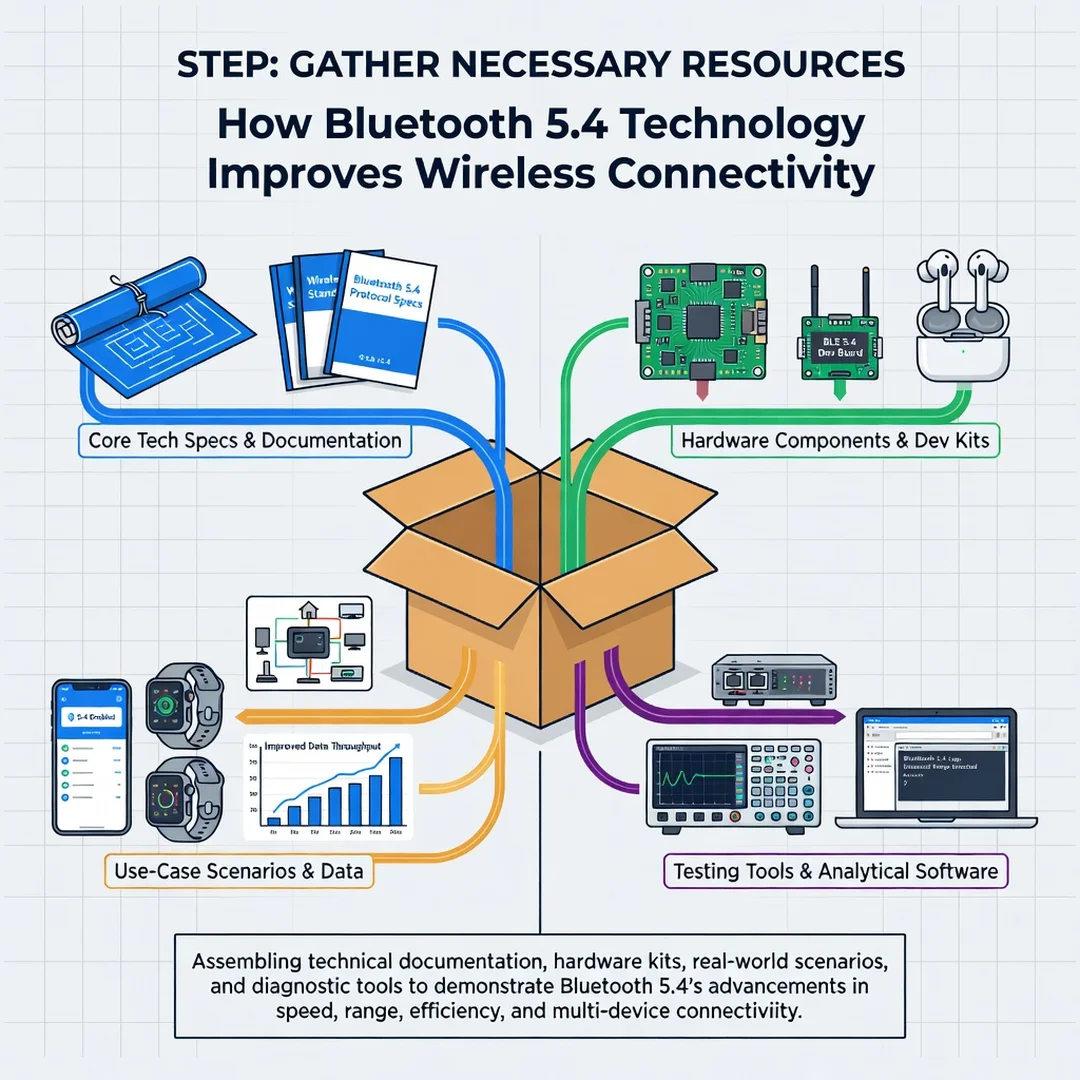
Depending on your goals, you may need new hardware or software. Identify which devices need upgrading to Bluetooth 5.4. Check if your phone or computer supports it via a software update. Download any firmware updates for existing devices. If you are building a smart home network, research hubs that support PAwR. Also gather tools: a Bluetooth scanner app can help you see signal strength and interference.
Step 5: Apply the core methods
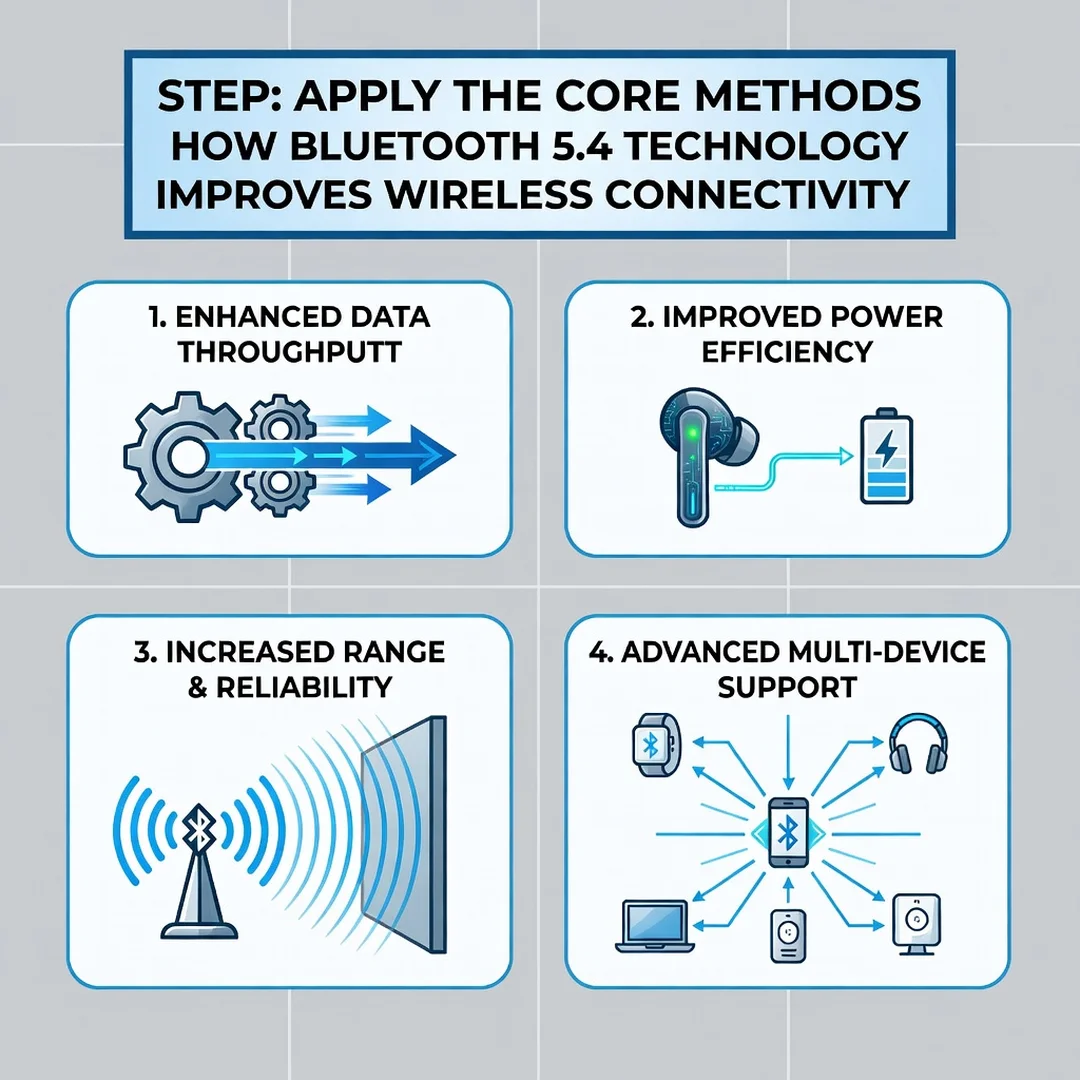
Now put the best practices into action. Update firmware on all compatible devices. Remove unused pairings. Reposition devices to reduce obstacles and interference. If you have new Bluetooth 5.4 hardware, enable advanced features like encrypted advertising if available. Pair devices one at a time and test each connection. For audio devices, try different codecs if your host supports them. For sensors, adjust reporting intervals if the option exists.
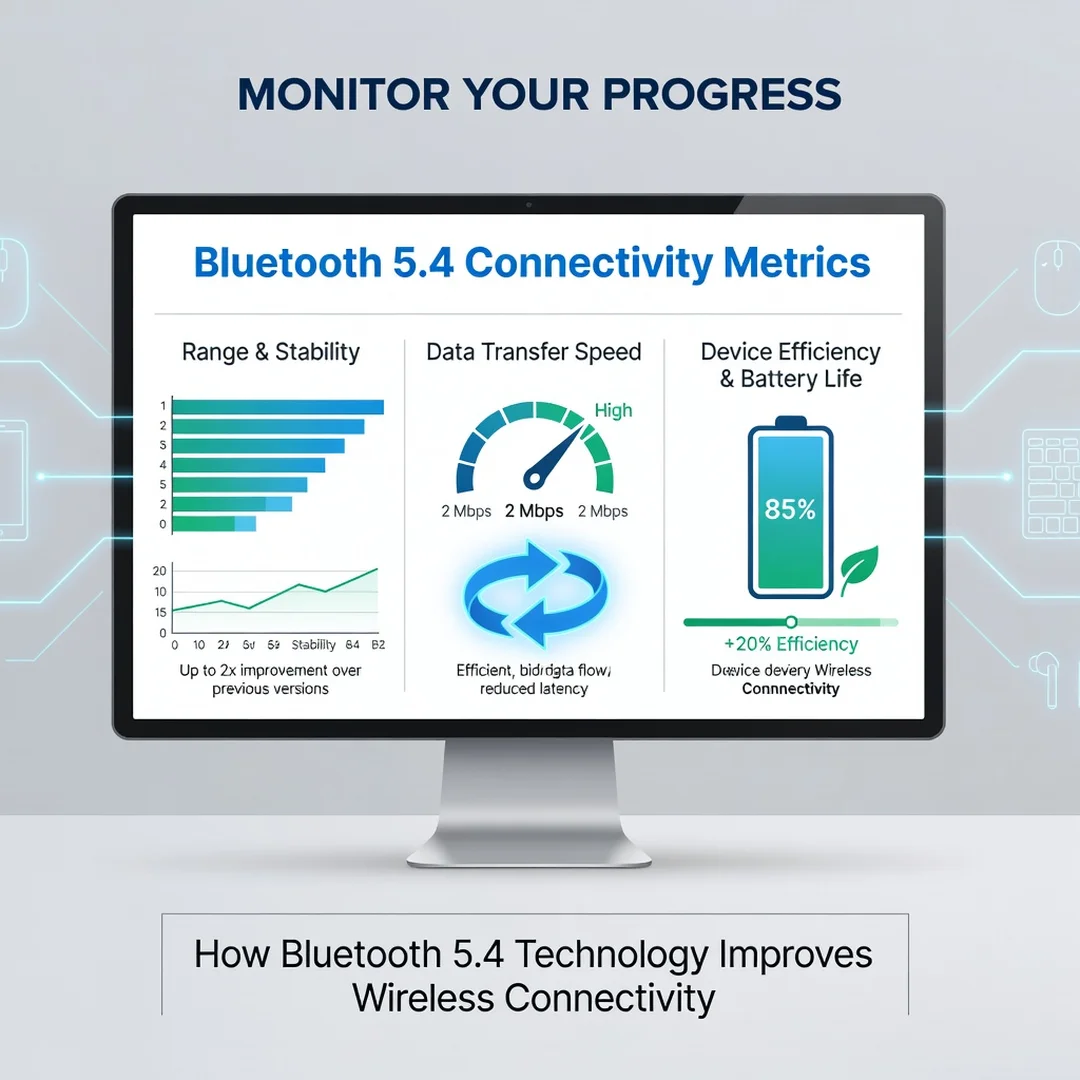
Step 6: Monitor your progress
After making changes, track your experience for a week or two. Note any improvements in battery life, connection stability, or pairing speed. Use a Bluetooth scanner app to check signal strength and interference levels. If problems persist, revisit earlier steps—perhaps a different channel or a firmware rollback is needed. Consistent monitoring helps you catch issues early and confirms whether your efforts paid off.
FAQ
What should I know about How Bluetooth 5.4 Technology Improves Wireless Connectivity?
The most important takeaway is that Bluetooth 5.4 improves connectivity through smarter features rather than raw speed. It introduces Periodic Advertising with Responses for efficient two-way communication, encrypted advertising data for better security, and refined power control for longer battery life. These improvements are most noticeable in dense wireless environments and in battery-powered devices. However, you need compatible hardware on both ends to benefit fully. If you are buying new devices, look for Bluetooth 5.4 support. If you already own devices, check for firmware updates that.
You now have a solid foundation for How Bluetooth 5.4 Technology Improves Wireless Connectivity. Apply the best practices above and revisit this guide as your needs evolve.