

Is your computer running slower than it used to? Over time, temporary files, leftover installs, and clutter can bog down even the fastest machine. Fortunately, you don’t need to spend a dime to get your PC back in shape. The best free system cleanup tools can quickly remove junk files, fix registry issues, and free up valuable disk space.
In this guide, we’ll walk you through the top free system cleanup tools available today, what each one does best, and how to use them safely. Whether you’re a casual user or a tech enthusiast, these picks will help you boost performance without risky downloads or hidden costs.
Introduction
A slow computer is one of the most common frustrations in modern computing. You sit down to work, browse, or play, and instead of instant responsiveness you get spinning wheels, laggy menus, and fans that sound like a jet engine. While aging hardware is one cause, the biggest culprit is often the accumulated clutter that builds up on every system over time: temporary files, leftover installers, bloated browser caches, stale registry entries, and startup programs you never asked for. This article explores Best Free System Cleanup Tools to Improve PC Performance with clear, practical guidance. It is written for anyone who wants a faster, more stable machine without spending money on premium software or risking their data with aggressive “optimizers.”
Free cleanup tools are not all created equal. Some are genuinely useful, lightweight utilities maintained by reputable developers. Others are little more than ad delivery vehicles that bundle unwanted programs and make vague promises about “boosting” your PC by thousands of percent. The difference matters, because the wrong tool can slow your system down, delete something important, or quietly install a browser hijacker. The right tool, used consistently, can reclaim gigabytes of disk space, reduce startup time, and keep your system running smoothly for years.
Understanding the fundamentals of Best Free System Cleanup Tools to Improve PC Performance helps you make informed decisions. You do not need to be a technician to use them well. You do need to know what each category of tool actually does, which tasks are safe to automate, and which “fixes” are better left alone. Reliable information and consistent habits lead to better long-term outcomes — far more than any single deep clean performed once a year.
Key Concepts
Before downloading anything, it helps to understand what “cleanup” really means on a Windows PC. The term covers several distinct jobs, and conflating them is where most confusion begins.
Junk file removal. Every time you install software, browse the web, or run an update, files get left behind. Windows itself generates temporary files, log files, error reports, and old update caches. Browser caches store copies of pages and images to speed up loading, but they can grow to several gigabytes. Free tools like Windows’ built-in Disk Cleanup and third-party utilities such as BleachBit scan for these files and remove them safely.
Startup management. Many programs quietly add themselves to the list of applications that launch when Windows boots. Over time, this list grows, and each item competes for CPU time and memory during those critical first minutes. Disabling unnecessary startup entries is one of the single most effective performance improvements available, and it costs nothing.
Registry cleaning. The Windows registry is a database of settings. Uninstalled programs can leave orphaned entries behind. Registry cleaners claim to remove these and speed up your PC. In practice, the performance gain is usually negligible, and the risk of deleting a valid entry is real. Most experts now advise leaving the registry alone unless you have a specific, diagnosed problem.
Disk and drive health. Cleanup also includes freeing space. A drive that is more than 90 percent full can noticeably slow down Windows, because there is less room for the page file and temporary data. Tools that visualize disk usage, such as WinDirStat, help you find the largest folders and decide what to remove.
Privacy cleanup. Some tools focus on erasing traces of your activity: browser history, cookies, recently opened files, and chat logs. This overlaps with performance work but serves a different goal. Decide which you actually need before choosing a tool.
One more concept matters: reversibility. Good cleanup tools create a restore point or back up what they remove. If a tool offers no undo, treat it with caution and never let it run unattended on important data.
Deep Dive
With the concepts clear, let us look at the leading free options and what each does best. This is not a ranking so much as a map, so you can match the tool to your actual need.
Windows Built-in Tools
Start here, because nothing is safer than the tools Microsoft ships with the operating system. Storage Sense (found under Settings > System > Storage) can automatically delete temporary files and empty the Recycle Bin on a schedule. Disk Cleanup, the older utility, still works well for a manual pass and includes a “Clean up system files” option that removes old Windows update files — often several gigabytes. Disk Defragmenter and its modern replacement, the Optimize Drives tool, handle hard disk fragmentation and SSD TRIM. These tools cost nothing, install nothing, and cannot be accused of bundling adware.
CCleaner
CCleaner is the best-known third-party cleaner. The free version removes junk files, browser caches, and cookies, and includes a startup manager and a basic registry cleaner. It is polished and easy to use. Two caveats: the free version increasingly nudges you toward the paid upgrade, and its registry cleaning feature should be used sparingly or skipped entirely. Health Check mode is a sensible, low-risk starting point for beginners.
BleachBit
BleachBit is open source, free of ads, and available for Windows and Linux. It is more utilitarian than CCleaner but more transparent: every action is listed, and you choose exactly what to delete. It handles browser caches, system logs, temporary files, and secure file shredding. The learning curve is slightly steeper, and the interface is dated, but for privacy-conscious users it is an excellent choice.
Autoruns and Task Manager
For startup bloat, Windows Task Manager’s Startup tab is sufficient for most people. Autoruns, a free Microsoft utility, goes far deeper, showing scheduled tasks, services, and shell extensions that load at boot. It is powerful enough to break your system if misused, so disable items rather than deleting them, and note what you changed.
WinDirStat and WizTree
These tools do not clean anything. They show you a visual map of what occupies your disk, sorted by size. WizTree is dramatically faster on modern drives. Use them to find forgotten video projects, duplicate installers, and game files you no longer need. The actual deletion is manual, which makes these tools safe by design.
Patch My PC and Sumo
Outdated software is both a security risk and a performance drag, since old versions often run background update checkers. Patch My PC (free for home use) scans your installed programs and updates them in bulk. Keeping software current is one of the most underrated cleanup habits.
What about the many “one-click booster” tools advertised online? Treat them skeptically. Claims of “300 percent faster” are marketing, not engineering. If a free tool requires you to install a browser extension or change your search engine, it is monetizing you, not helping you.
Step 1: Understand the fundamentals
Before touching any tool, learn what each category does and what it cannot do. Junk file removal recovers disk space. Startup management improves boot time. Registry cleaning offers marginal benefit with real risk. Defragmentation matters for mechanical hard drives but not for SSDs. Write these distinctions down or keep them in mind, because they will guide every choice that follows. If you understand that most “PC slowdown” comes from too many background programs and too little free disk space, you will avoid the trap of running aggressive registry cleaners that promise miracles.
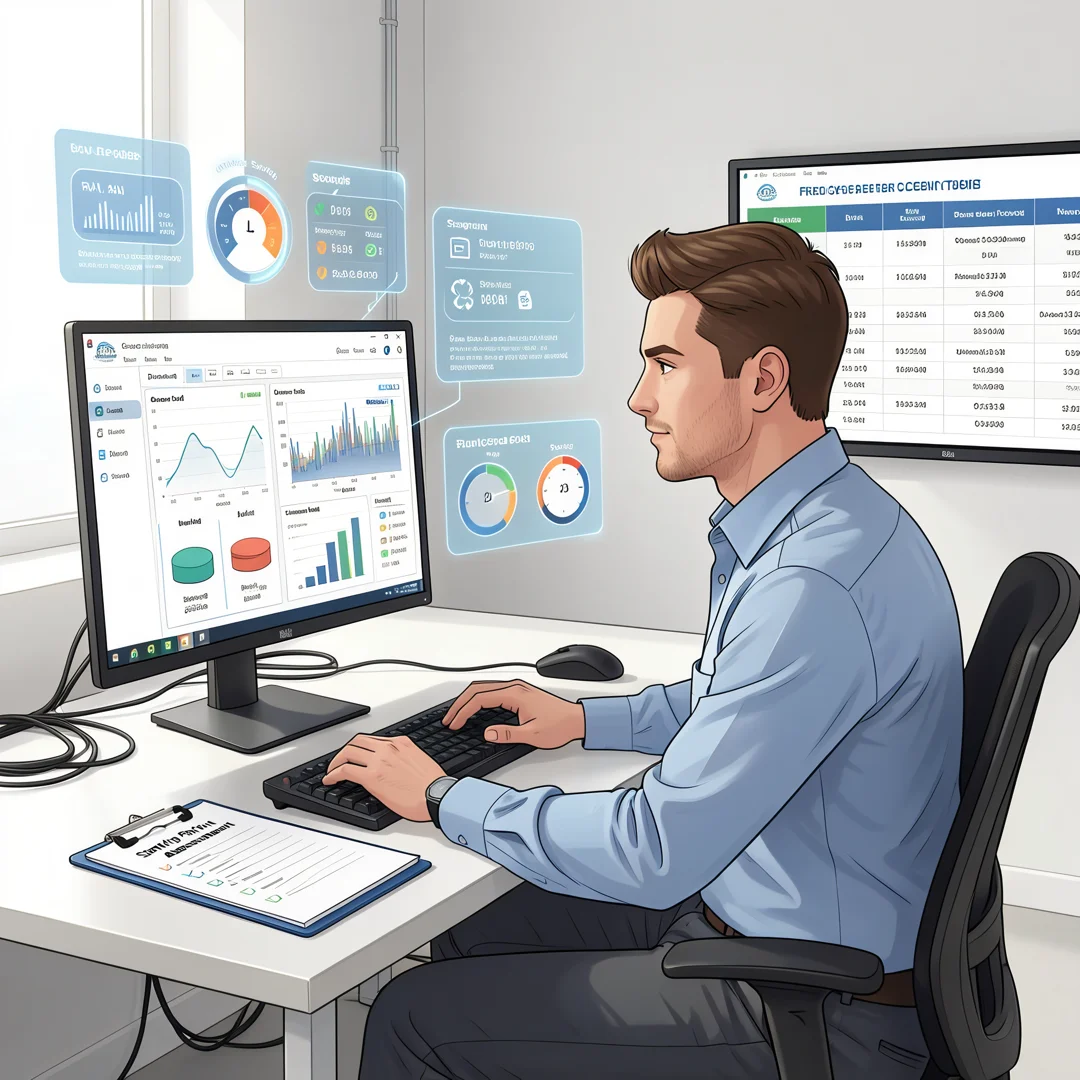
Step 2: Assess your starting point
Measure before you optimize. Open Task Manager and check two things: how many startup programs are enabled, and how much memory and CPU are in use at idle. Note your free disk space in File Explorer. Time your boot process roughly — from pressing the power button to a usable desktop. These simple measurements give you a baseline. Without one, you cannot tell whether your cleanup actually helped, and you may end up “fixing” a problem that never existed.

Step 3: Set clear goals
Decide what “better performance” means for your machine. Do you want a faster boot? More free disk space? Quieter fans during video calls? A snappier browser? Each goal points to a different tool and a different set of actions. A gamer with a nearly full SSD has different priorities than an office worker whose laptop takes three minutes to wake up. Vague goals lead to vague results and endless tinkering.
Step 4: Gather necessary resources
Download only what you need, and only from official sources. For a basic cleanup, that means Windows Storage Sense plus one reputable third-party cleaner such as CCleaner or BleachBit. For startup control, Task Manager is already on your system. For disk analysis, WizTree or WinDirStat. Before running anything that deletes files, create a restore point via the Start menu search for “Create a restore point.” Back up anything irreplaceable to an external drive or cloud service. Thirty minutes of preparation can save you hours of recovery.
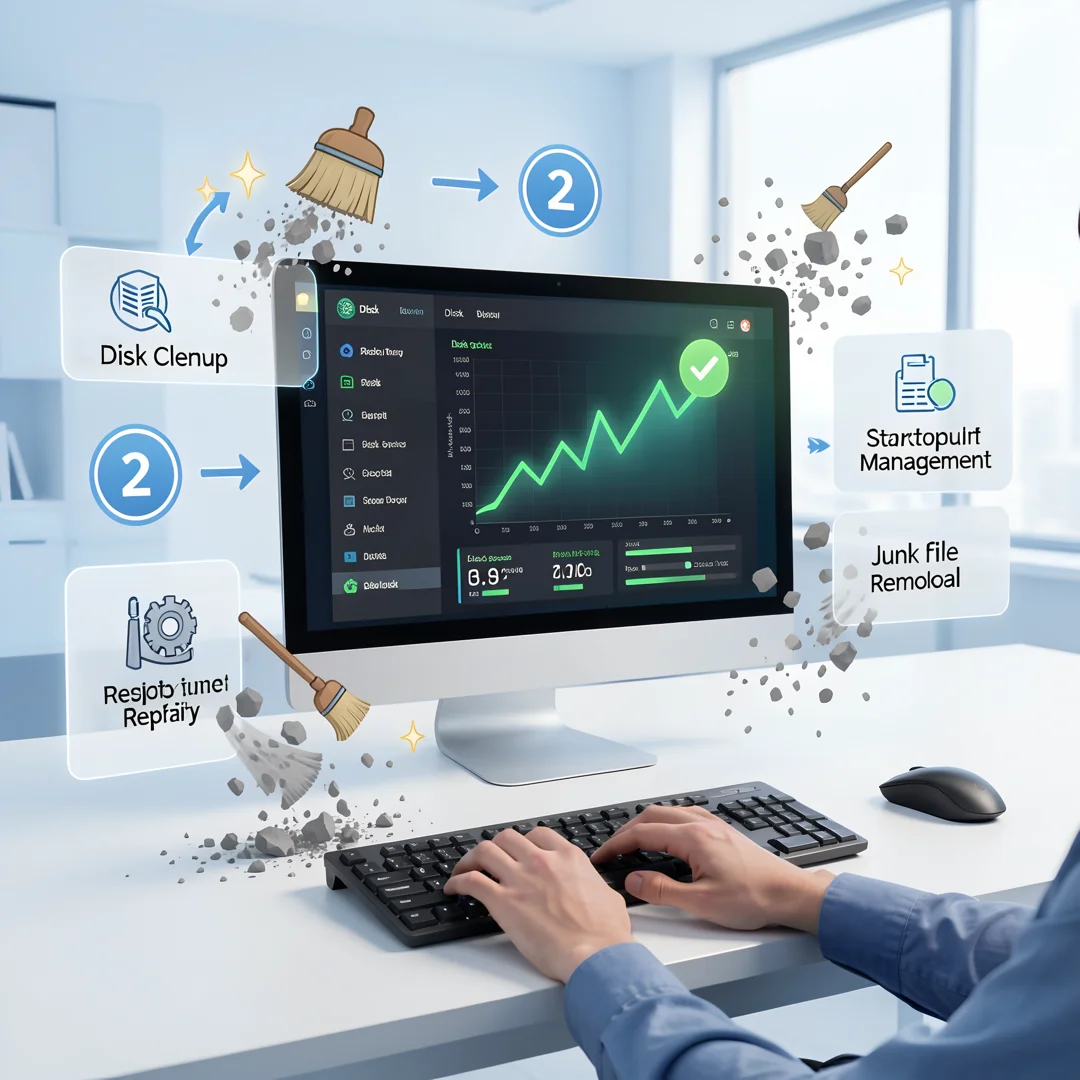
Step 5: Apply the core methods
Work through the tasks in order of safety and impact. First, empty the Recycle Bin and run Storage Sense or Disk Cleanup, including the system files option. Second, open Task Manager’s Startup tab and disable programs you recognize as unnecessary — chat apps, game launchers, updaters — while leaving security software enabled. Third, sort your disk by size with WizTree and remove large files you no longer need. Fourth, update your installed programs with Patch My PC. Fifth, if you have a mechanical hard drive, run the Optimize Drives tool; skip this step for SSDs beyond the built-in TRIM. Resist the urge to run a registry cleaner. Reboot and observe the difference.
Step 6: Monitor your progress
Compare against your baseline. How much free space did you recover? Did startup time improve? Is idle memory usage lower? Set a reminder to repeat the light tasks monthly: empty the Recycle Bin, clear browser caches, review the startup list for newly added entries. Software updates will re-add startup items over time, and caches regrow, so consistency matters more than intensity. If performance does not improve after cleanup, the bottleneck may be hardware — insufficient RAM.
You now have a solid foundation for Best Free System Cleanup Tools to Improve PC Performance. Apply the best practices above and revisit this guide as your needs evolve.